Hytale Biome & Underground Guide - Surface Links to Depths
Last updated: 2026-01-25
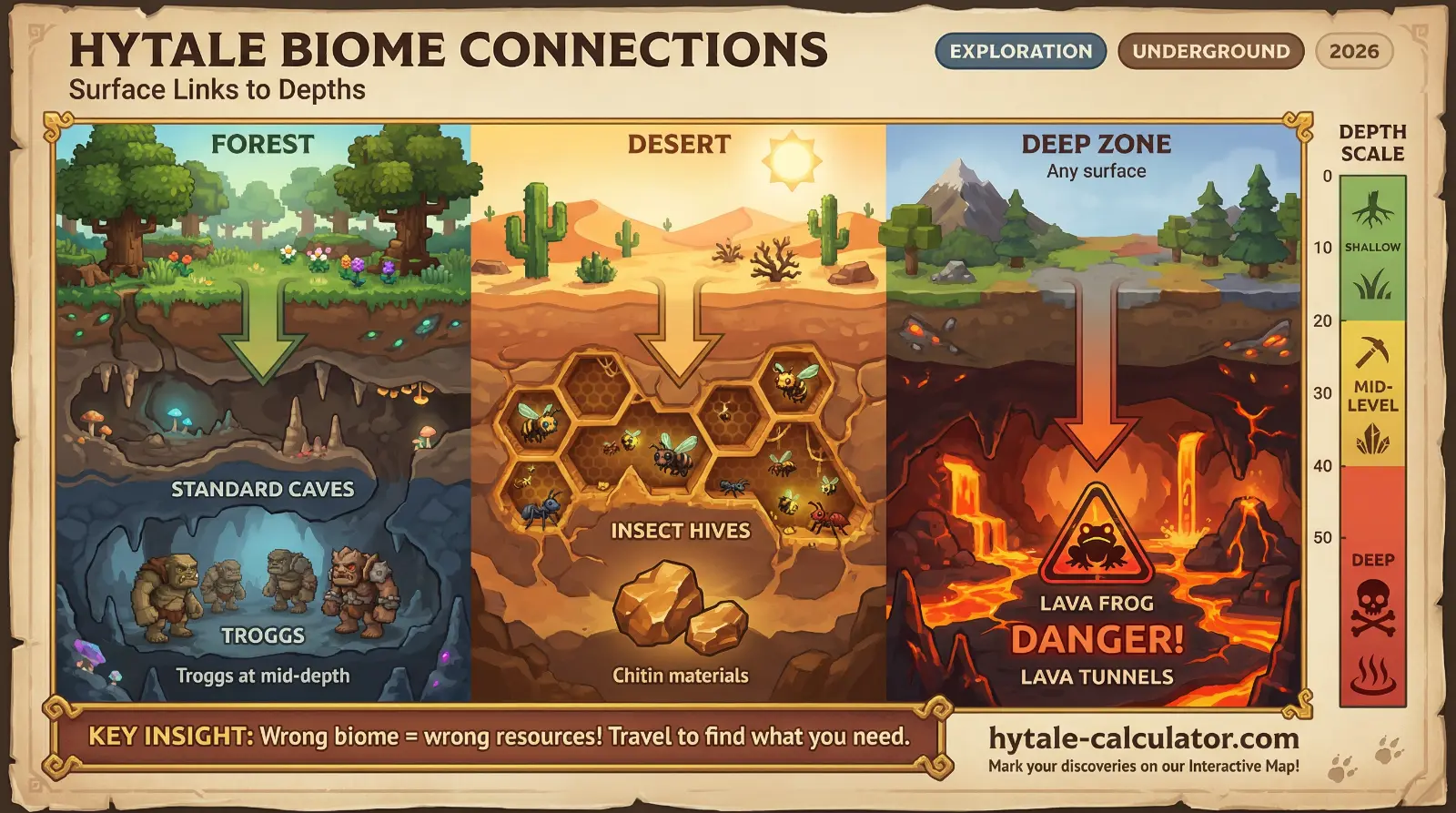
I spent hours mining under a forest looking for specific resources, only to learn later that what I needed was exclusively under desert biomes. Hytale's world isn't random—surface biomes directly determine what you'll find underground. This guide would have saved me a lot of wasted time.
Quick Answer
Surface biomes are linked to specific underground environments. Dig under a desert and you'll find insect hives. Go deep enough anywhere and you'll hit lava tunnels. Knowing these connections before you mine is the difference between efficient farming and wasted hours.
The Biome-Linking System
This is Hytale's most important exploration mechanic that I completely missed at first. Unlike Minecraft where underground is mostly uniform, Hytale connects surface biomes to specific underground content:
Desert Surface → Insect Hives Below
- Bug enemies and their nests
- Unique drops from insect creatures
- Chitin-based crafting materials
- Different challenge than standard caves
Forest Surface → Standard Cave Systems
- Traditional mining experience
- Trogg encounters at mid-depth
- Basic ores and materials
- Good for learning cave mechanics
Deep Underground (Any Biome) → Lava Tunnels
- Extremely dangerous environment
- High-tier resources
- Lava Frogs and other deadly creatures
- Requires serious preparation
This system means you can't just dig anywhere and expect to find everything. You need to travel to specific surface biomes to access their underground content.
Surface Biomes Detailed
Here's what each surface biome offers and what's beneath it:
Forest Biomes:
- Surface: Wood, basic plants, peaceful wildlife
- Underground: Standard caves, copper, iron at depth
- Danger: Low on surface, medium in caves
- Best for: Early game, establishing a base
Plains/Grassland:
- Surface: Open terrain, stone outcrops, varied wildlife
- Underground: Similar to forests, good ore access
- Danger: Medium (open terrain = visible to predators)
- Best for: Fast travel, surface resource gathering
Desert Biomes:
- Surface: Sand, sandstone, heat-adapted creatures
- Underground: Insect hives with unique enemies and resources
- Danger: High in hives (insects swarm)
- Best for: Chitin materials, unique crafting ingredients
Volcanic/Lava Zones:
- Surface: Volcanic rock, lava pools, Lava Frogs
- Underground: Lava tunnels, extreme heat, best ores
- Danger: Extremely high (instant death territory)
- Best for: Endgame only, rare materials
Underground Depth Tiers
Regardless of surface biome, depth matters:
Shallow (0-20 blocks):
- Basic ores (stone, copper)
- Entry-level enemies
- Often connects to surface
- Safe for new players
- Good for learning cave navigation
Mid-level (20-50 blocks):
- Better ores (iron, some rare materials)
- Trogg encounters begin
- Cave systems become complex
- Requires decent armor
- Easy to get lost
Deep (50+ blocks):
- Best ores (thorium, adamantite)
- Strongholds appear
- Multiple enemy types simultaneously
- Lava tunnels possible
- Requires full preparation
The Insect Hive Experience
Since I mentioned desert → insect hives, here's what to expect:
What You'll Find:
- Hive structures with multiple chambers
- Insect enemies that defend their territory
- Unique resources not found elsewhere
- Different visual style than standard caves
Preparation:
- AOE weapons work well against swarms
- Fire-based damage if available
- Extra healing—swarm damage adds up fast
- Good armor against poison/bite effects
Why Go There:
- Chitin materials for specific crafting
- Memory System discoveries (lots of new creatures)
- Break from standard cave grinding
- Required for certain equipment tiers
Lava Tunnel Warning
Deep lava tunnels are where Hytale stops being forgiving:
The Danger:
- Lava Frogs that one-shot undergeared players
- Environmental lava damage
- Limited escape routes
- Easy to fall into lava pools
When to Go:
- After completing most surface and mid-cave content
- With best available armor
- With fire resistance if possible
- Only when you need specific deep resources
How to Survive:
- Move slowly and carefully
- Always have an escape route planned
- Bring multiple healing options
- Don't fight Lava Frogs without proper gear
Biome Exploration Strategy
Based on what I learned the hard way:
Early Game:
- Stay in forest/plains biomes
- Explore shallow caves only
- Mark cave entrances for later
- Don't venture into deserts or volcanic areas
Mid Game:
- Expand to desert biomes
- Tackle insect hives for unique materials
- Go deeper in forest caves (Trogg territory)
- Avoid volcanic areas still
Late Game:
- Access lava tunnels for rare resources
- Clear Trogg Strongholds
- Explore volcanic surface carefully
- Hunt for endgame materials in all biome depths
Resource Mapping
What resources are biome-locked:
| Resource Type | Where to Find |
| Basic ores | Any cave system |
| Chitin/insect materials | Desert underground only |
| Fire-related materials | Volcanic biomes only |
| Standard rare ores | Deep caves anywhere |
| Unique gems | Biome-specific deposits |
If you're farming specific materials, go to the right biome first. Don't waste time digging in the wrong location.
The Memory System Connection
Exploring different biomes feeds the Memory System significantly:
- Each biome has unique creatures = discoveries
- Underground variants = more discoveries
- New block types per biome = even more discoveries
- Insect hives alone provide many new entries
Visit every biome type to maximize recipe unlocking. See our Memory System Guide (/hytale-guides/memory-system) for the full progression system.
Common Exploration Mistakes
What I did wrong so you don't have to:
- Mining only under forests — Missed biome-specific resources entirely
- Ignoring depth — Stayed too shallow, never found good ores
- Not marking locations — Found great spots, couldn't find them again
- Rushing to lava tunnels — Died repeatedly, wasted resources
- Skipping insect hives — Missed unique materials I needed later
Using the Interactive Map
Our Interactive Map tool helps you track:
- Biome boundaries and types
- Cave entrance locations by biome
- Resource hotspots you've discovered
- Dangerous areas to avoid or prepare for
Mark what you find as you explore. Future you will thank past you.
FAQ
Q: Do surface biomes blend into each other?
Yes, biomes transition gradually. You'll see mixed zones at boundaries. Underground content typically follows the dominant surface biome.
Q: Can I find insect hive materials anywhere else?
No. Insect-related resources are exclusive to desert underground. You must travel there to get them.
Q: How do I know which biome I'm under?
The cave environment changes based on surface biome. Insect hives look different from standard caves. You'll notice the difference.
Q: Should I clear one biome completely before moving to another?
No. Explore breadth first for Memory System progress, then go deep in specific biomes for targeted farming.
Q: What's the most dangerous underground area?
Deep lava tunnels, especially under volcanic biomes. Lava Frogs are the deadliest enemy in the game for unprepared players.
Q: Can I build bases underground?
Yes, but clear the area first and light it well. Enemies spawn in dark areas. Consider building near (but not in) your target farming zones.
Try our tool mentioned in this guide
Interactive Map →